
Modern Office Interior Concepts: How to Make a Functional Office Interior

Gaurav Chaudhary
Founder & Managing Director, Serein Spaces
Today's office interior isn't simply about clean and minimal design. It's about creating spaces that let people work the way they actually do today — through flexible layouts, good lighting, comfortable furniture and areas that encourage collaboration. A modern office reflects both the essence of a business and the practicality of its staff.
Businesses have moved away from a one-size-fits-all office environment. They're looking for interiors that are more flexible, that support hybrid work arrangements, that enhance employee health and wellness, and that feel welcoming and professional to clients and guests. This is why experienced interior companies like Serein Spaces create spaces that are both on-trend and genuinely functional.
In this guide, we'll walk through the characteristics of a modern office interior, the elements that define it, and practical suggestions for businesses shaping their own workspace.
How to Create a Modern Interior for an Office?
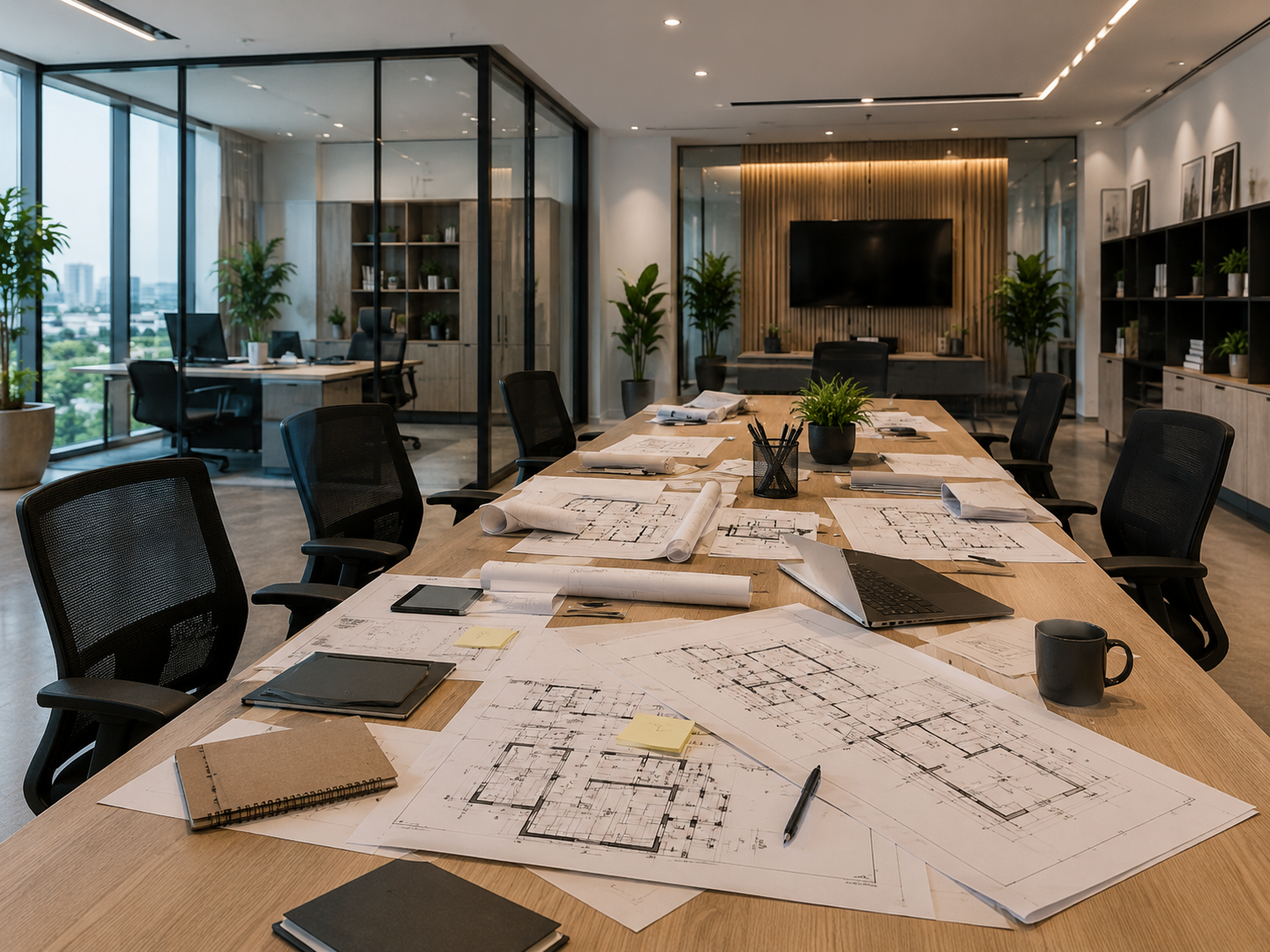
Modern office interior design is not something that can be made ready-made, but rather is structured around the way in which people work. It typically features open floor plans, plenty of natural light, flexible furniture and space, and considered colour and material choices that keep the space both professional and comfortable.
A modern office interior generally shares these characteristics:
- An open, flexible layout that supports different work styles
- Natural light and biophilic elements
- Furniture that's easy to use and rearrange
- Simple, uncluttered material and colour choices
- Technology built into everyday tasks
- A mix of spaces for focused work and collaboration
The space stays flexible and adaptable, able to change as the team grows or the way people work shifts — without needing a full redesign.
Key Elements to Consider for a Modern Office Interior
Space Planning & Layout
Modern offices are designed around activity and process, not just headcount.
- Space for group work on the days it's needed
- Quiet areas set aside for individual, focused tasks
- Meeting rooms sized appropriately for the team
- Informal areas to exchange ideas and unwind
Furniture
- Ergonomic chairs and desks
- Height-adjustable options
- Modular seating for meeting and breakout areas
- Efficient desk storage that keeps workstations clutter-free
Lighting
A well-designed lighting plan can make the office a comfortable and efficient work environment all day.
- Daylight used to its full advantage at workstations
- Focused task lighting at desks
- Ambient lighting for common and breakout areas
- Adjustable lighting systems in meeting rooms
Materials & Colour Palette
Materials and colours stay contemporary without needing frequent changes.
- Neutral base colours for walls and floors
- Low-maintenance, durable finishes
- Accent colours that tie back to the brand
- Wood and stone for natural warmth
Technology Integration
Technology is planned into the design from the start, rather than added on afterward.
- Video conferencing solutions in meeting rooms
- Smart access and security systems
- Well organised, free of cable workstations
- Charging points embedded into furniture
Branding Elements
Brand identity is built into the design rather than relying on heavy signage.
- Logo and brand colours at the entrance
- Walls that reflect company values
- Wayfinding and signage in the brand's tone
- Consistent brand presence across common areas
Benefits of a Modern Office Interior
A good interior design for a modern office does more than improve appearance — it directly affects day-to-day business operations.
- Higher employee productivity, as spaces are designed to support both focused and collaborative work
- Better employee wellbeing, supported by natural light and comfortable furniture layouts
- Stronger brand impression for clients, visitors and prospective employees
- More flexibility to adapt as the team grows or working arrangements change
- Lower long-term maintenance costs thanks to durable materials and straightforward finishes
- A stronger edge in attracting and retaining talent, as candidates increasingly factor workplace quality into their decisions
These benefits build up over time — a modern office is as much an investment in business growth as it is in appearance.
Traditional vs Modern Office Interior
| Aspect | Traditional Office | Modern Office |
|---|---|---|
| Layout | Fixed cabins and rows of desks | Open, flexible layouts |
| Furniture | Standard, non-adjustable | Ergonomic and modular |
| Lighting | Mostly artificial lighting | Natural light enhanced with artificial lighting |
| Technology | Added individually, often visibly | Optimised into the design from the start |
| Adaptability | Needs redesign for changes | Designed to flex with evolving requirements |
| Branding | Limited or absent | Brought to the surface through design elements |
Modern Ideas for Office Interior Design
Reception Area
Keep the design simple and inviting, with the brand prominent at the entrance. Clean seating, good lighting and a small amount of greenery make a strong impression — without overdoing it.
Meeting Rooms
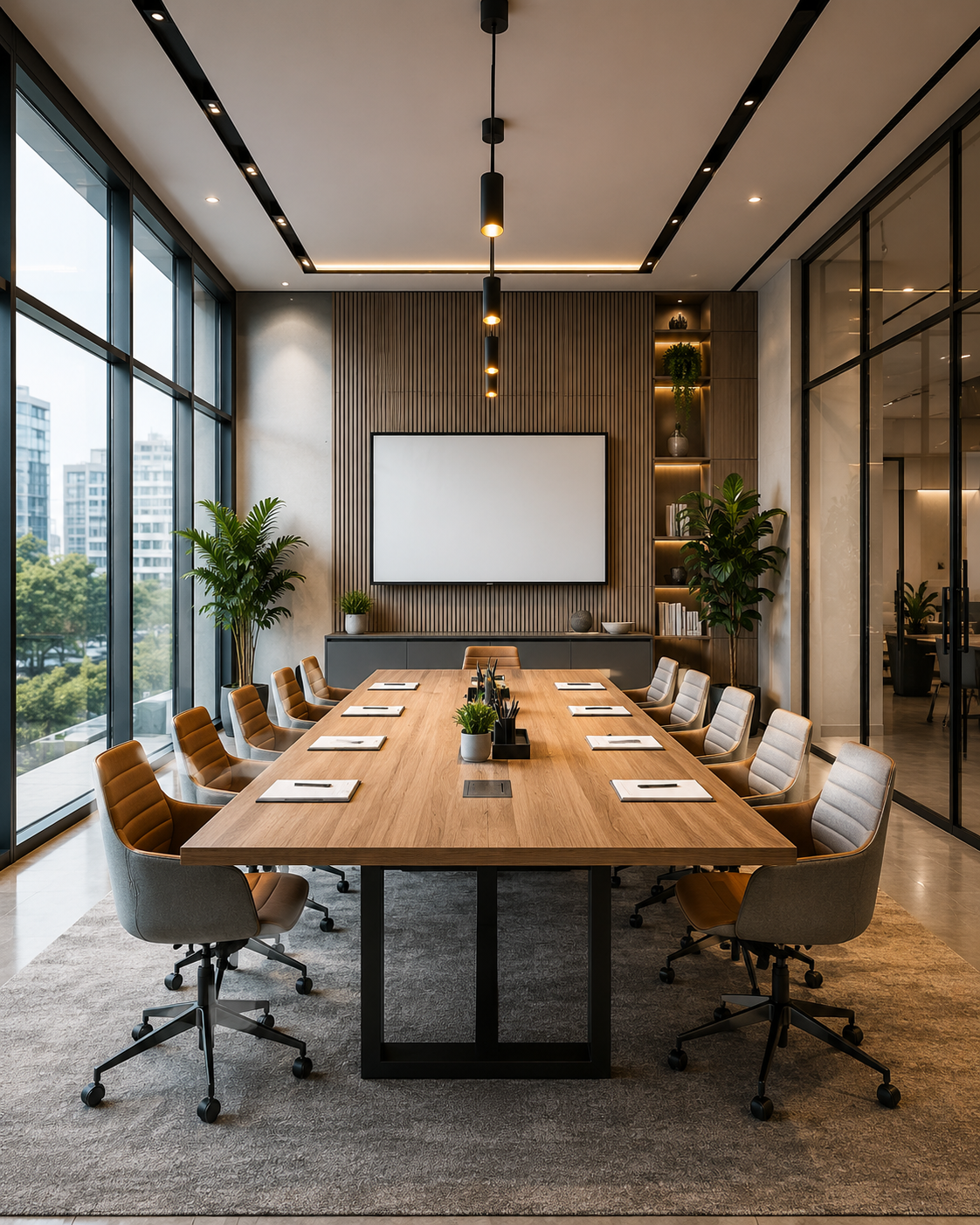
Choose furniture that works for both small huddles and larger meetings. Glass partitions help keep spaces feeling open while still offering privacy for calls and meetings.
Breakout Areas
A change in seating, lighting, flooring or colour signals that a space isn't for work. Even a small corner, used well, can make a real difference to an employee's day.
Cabins & Private Offices
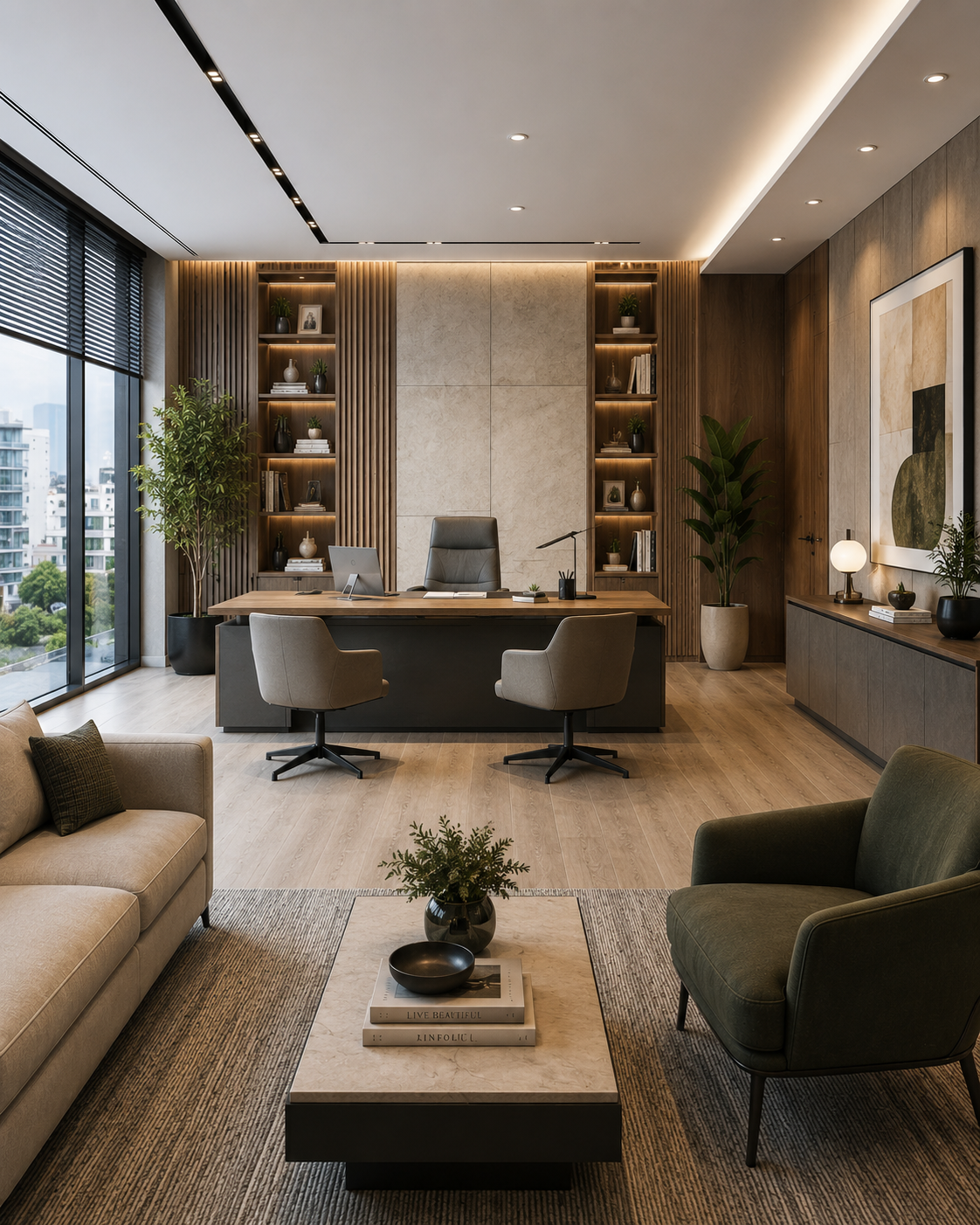
Avoid a cabin design that feels completely disconnected from the rest of the office. Glass fronts or partial partitions keep the space feeling open while still offering privacy.
Common Mistakes to Avoid in a Modern Office Interior
- Following a trend without considering how the team actually works
- Overfilling the room with furniture or decoration
- Treating acoustics as if they were irrelevant in open spaces
- Prioritising style over durability in high-use areas
- Leaving technology planning until implementation, instead of designing it in from the start
Avoiding these keeps the design looking good and working well — not just at handover, but long after the project is complete.
The Serein Spaces Approach to Modern Office Interior
Knowing Your Workflow
We start by understanding your team structure, culture and day-to-day working habits, then apply a layout that fits how your people actually work.
Balanced Design
Furniture, materials and lighting are selected to keep the space current, functional and well organised for daily use.
Flexible Layouts
Spaces are designed with enough flexibility to accommodate future team growth or changes in how the space is used, so you're not redesigning from scratch later.
Design to Handover
Serein Spaces manages the whole project from design through to final delivery under one roof, keeping the process simple for the business.
Conclusion
When it comes to a modern office interior, design choices are best based on how your team actually works, not on the latest trend. With the right layout, furniture, lighting and materials, a modern office can support a productive, healthy workplace that's also flexible enough to grow with your business.
Whether you're planning a modern office interior from inception to handover, Serein Spaces can help make it a reality.

