
Office Glass Door Design Ideas for Modern Workspaces

Gaurav Chaudhary
Founder & Managing Director, Serein Spaces
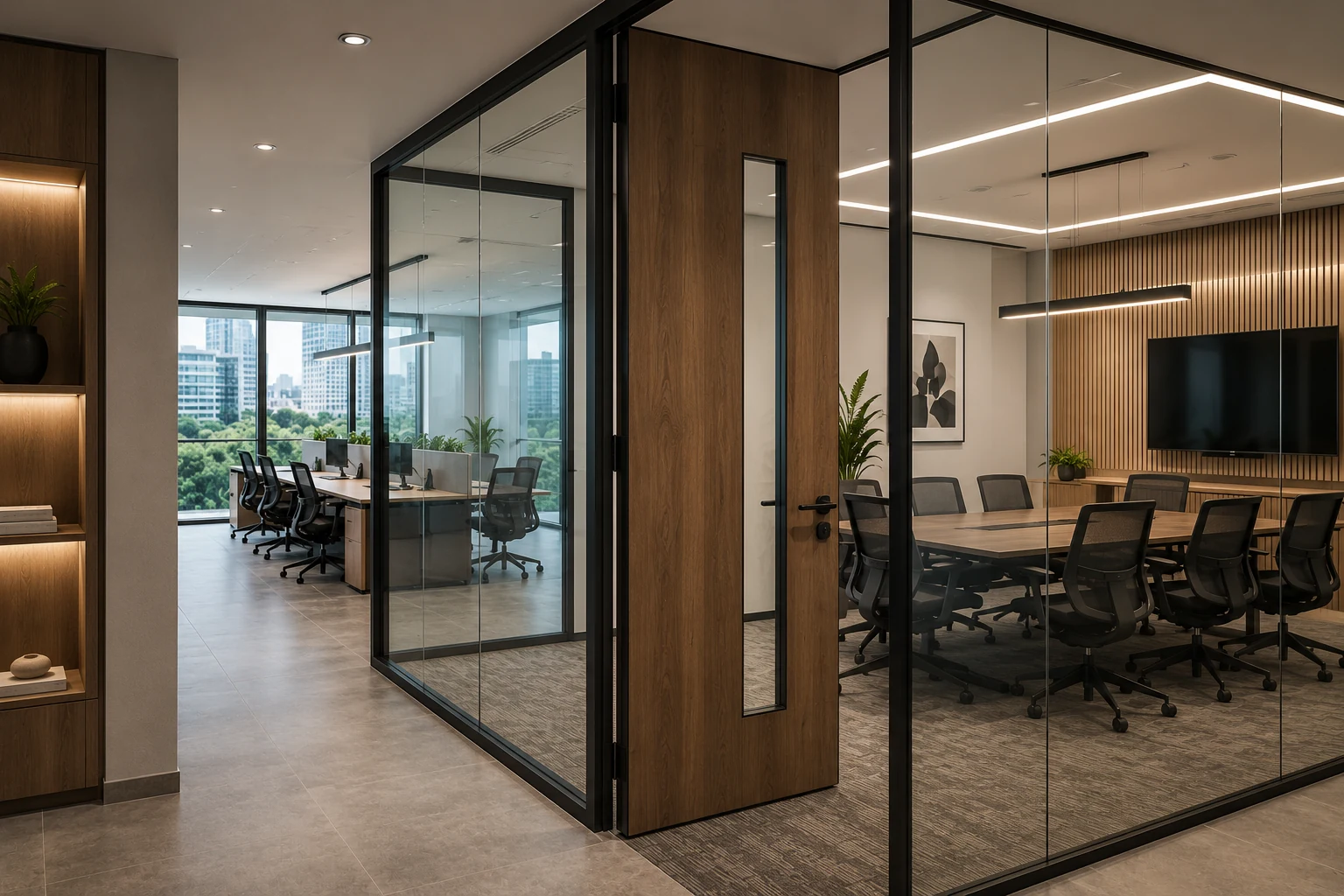
Office doors are no longer just considered as functional that is to close off a room. The door has come a long way today, becoming an integral part of the appearance and atmosphere of the working environment, particularly glass doors have become an integral part of modern office interior. They allow light in from one room to another, maintain sight lines and provide even a small office space with a larger and more modern appearance.
This shift comes from how businesses want their offices to feel. Fewer companies want solid, closed off cabins and corridors that make a workspace feel divided. They are looking for an open, connected layout for their gateway, meeting rooms and private offices that provides privacy when it's essential. The design of the office glass doors is becoming a key factor in accomplishing that balance, so it's generally determined at the beginning of an interior project, not at the end.
This guide will take you through how glass doors can enhance modern office interiors, some of the factors to consider when selecting a glass door, and some ideas about how it can be used in various parts of the office.
How Glass Doors Improve Modern Office Interiors
The design of office glass doors is not limited to style, but is based on the actual utilization of a workspace on a day-to-day basis. It is often full of natural light, flowing from one area to another, and can even make a small office appear bigger and more open, with transparency.
A well designed glass door setup generally offers these benefits:
- Better distribution of natural light across cabins and meeting rooms
- A more open, connected feel between separate areas of the office
- A cleaner, more contemporary look at entrances and private offices
- Easier visual supervision of shared or collaborative spaces
- Flexibility in adding privacy as it is needed, if at all.
Maintaining an open, flexible layout allows the area to be used as a "transitional" space when needed, or as a private space when necessary, without the need to install a new door in it for each function.
Key Elements to Consider When Choosing Office Glass Doors
Glass Type
The type of glass used has a direct effect on how the door performs and looks over time.
- Toughened or tempered glass for standard office doors
- Laminated glass where added strength and safety are a priority
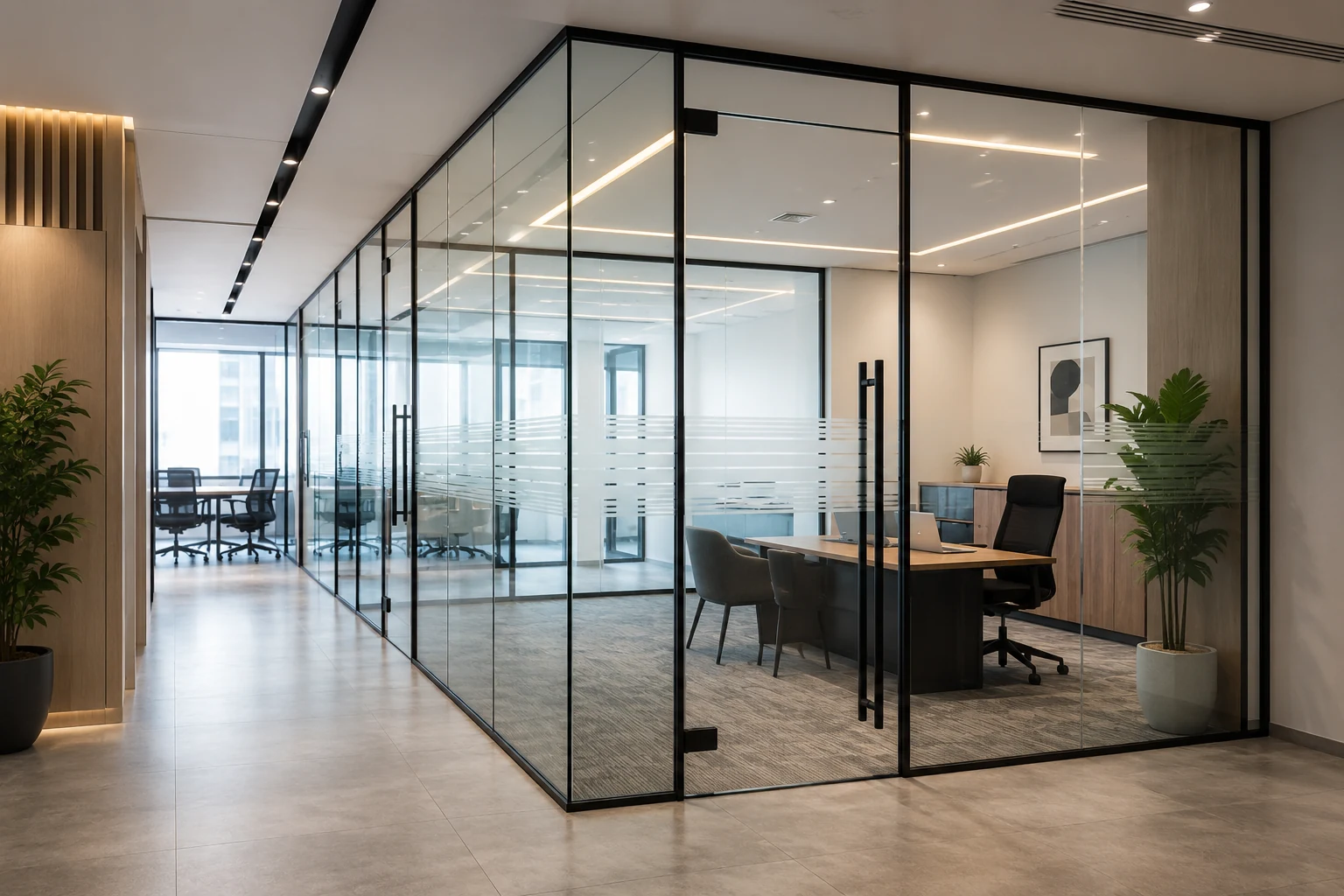
- Frosted or textured glass for areas that need partial privacy
- Double glazed glass where sound insulation matters
Door Style
The style of the door shapes both the look of the space and how practical it is day to day.
- Framed doors for a sturdier, more traditional look
- Frameless doors for a cleaner, more contemporary finish
- Sliding doors where floor space is limited
- Swing doors for entrances and larger meeting rooms
Privacy
How much privacy a room needs should guide the glass treatment chosen for it.
- Fully transparent glass for open, collaborative spaces
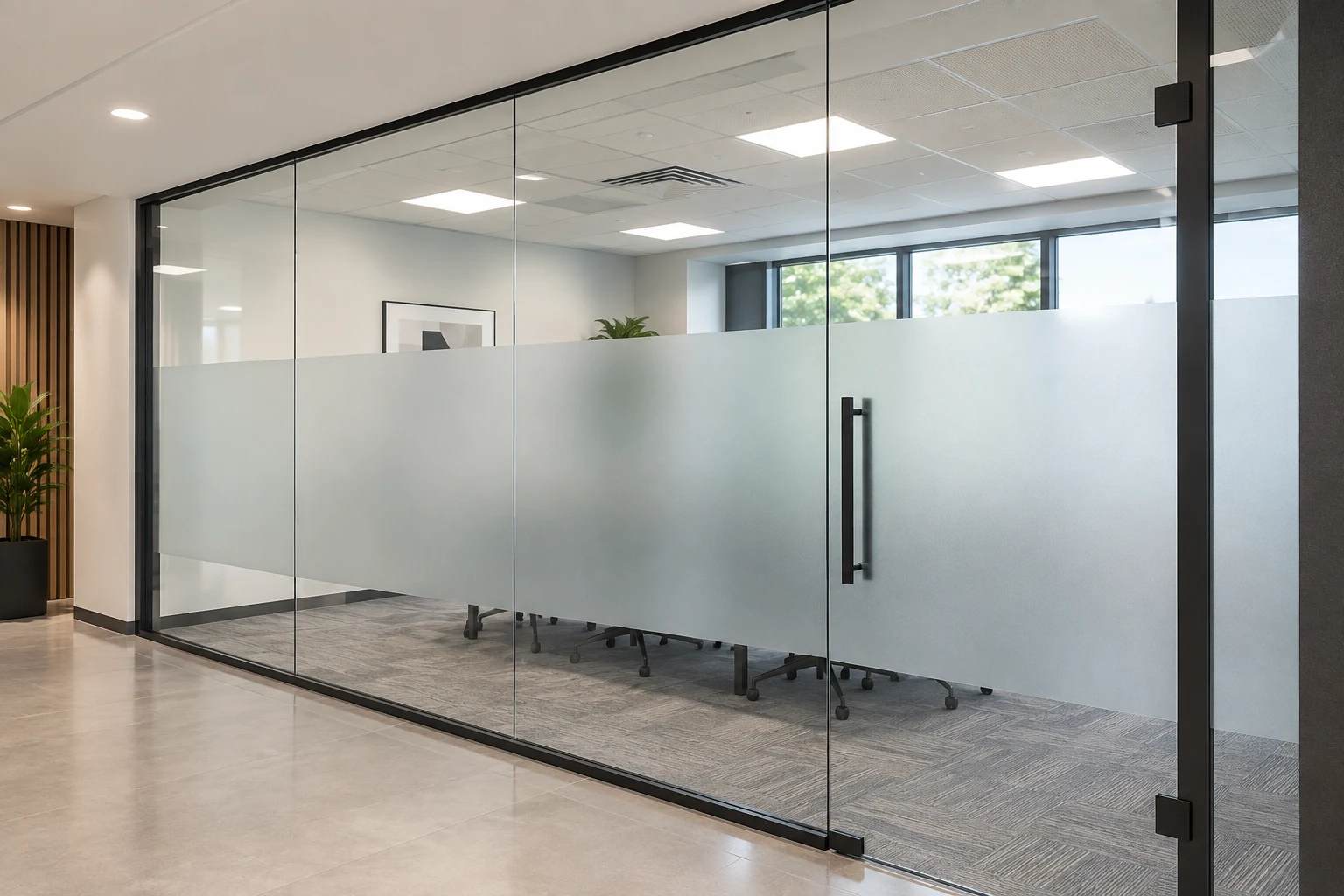
- Partial frosting at eye level for cabins and private offices
- Switchable smart glass for rooms that shift between open and confidential use
- Curtains or blinds as a flexible, lower cost privacy option
Safety
In high traffic areas glass doors should be used and should not be a compromise with respect to safety standards.
- Toughened Glass is Glass that breaks into blunt pieces instead of sharp shards.
- Thick enough glass - typically 10mm to 12mm for office doors
- Visible manufacturer certification for safety compliance
- Anti collision markings or decals where doors are fully transparent
Hardware and Door Systems
The hardware often determines how smoothly a glass door functions over years of daily use.
- Heavy duty hinges and closers suited to the weight of the glass
- Reliable tracks and rollers for sliding door systems
- Handles and locks that match the overall design language
- Quality fittings that reduce the risk of wear or misalignment
Space and Layout
The layout of the room should inform which door type and opening style makes the most sense.
- Sliding doors for tight corridors or compact cabins
- Swing doors where there's enough clearance around the entrance
- Door placement that doesn't obstruct walkways or shared areas
- Coordination with existing glass partitions for a consistent look
Benefits of Office Glass Doors
Office glass doors do more than improve appearance, they directly affect how a workspace functions day to day.
- Better natural light distribution across cabins and meeting rooms
- A more open, connected feel between separate areas of the office
- Stronger first impressions for clients, visitors and prospective employees
- Flexibility to adjust privacy through frosting, film or switchable glass
- Lower long-term costs compared to solid doors that need frequent repainting or repair
- A more contemporary look that keeps the office feeling current for longer
These benefits build up over time, a well planned glass door setup is as much about how the office functions as it is about how it looks.
Glass Doors vs Solid Doors for Offices
| Aspect | Glass Doors | Solid Doors |
|---|---|---|
| Natural light | Passes through, keeps space bright | Blocks light between rooms |
| Visual openness | Keeps rooms feeling connected | Fully closes off the space |
| Privacy | Adjustable with frosting, film or switchable glass | Complete by default |
| Sound insulation | Lower unless double glazed | Generally better |
| Maintenance | Needs regular cleaning to avoid smudges | Lower daily maintenance |
| Cost | Higher for frameless or acoustic glass | Generally more affordable upfront |
| Best suited for | Entrances, cabins, meeting rooms | HR rooms, storage, high privacy areas |
Modern Office Glass Door Design Ideas
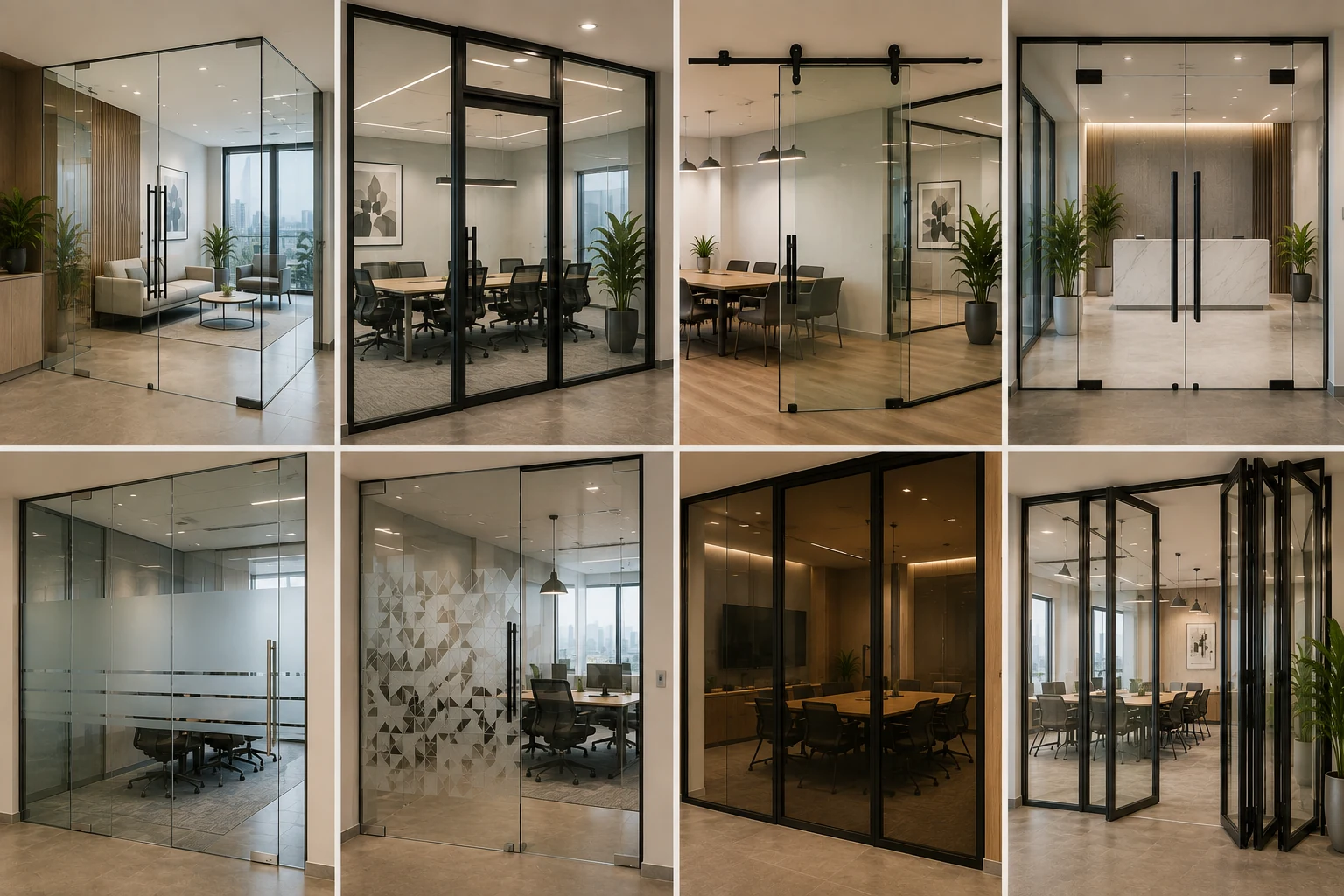
Frameless Glass Doors
A frameless door is ideal at entrances and executive cabins, where the look should be upscale. The glass is not bordered by any other materials, making the door appear to be part of the surrounding area.
Sliding Glass Doors
Sliding doors are good for smaller storage rooms, walkways and cabins because they don't require any space for swinging. They're a sensible option in any location where the floor area is restricted but open and glass look is desired.
Frosted Glass Doors
The frosted glass brings an equilibrium between openness and privacy, light penetration and privacy. This is great for HR cabins, private offices and washrooms.
Tinted Glass Doors
Tinted glass provides a bit of privacy and color to the design but doesn't completely obscure light. This can be selected when you want a bit more privacy than clear glass provides for a meeting room or meeting cabin.
Glass Partition Doors
A coordinated use of a glass door with a glass partition enhances the continuity of the environment in conference rooms, open plan offices, etc. This will maintain uniformity of design throughout the space rather than make the door a stand alone item.
Framed Glass Doors
The framed doors offer a traditional appearance, are more robust and work best for the entrance that is accessed and opened all day long, especially if the areas are busy. They are also typically less expensive than frameless ones.
Common Mistakes to Avoid When Using Glass Doors
- Choosing frameless glass for every space without considering where sound privacy actually matters
- Skipping frosting or film on cabins where visual privacy is genuinely needed
- Using standard glass instead of toughened glass in high traffic areas
- Ignoring hardware quality, which affects how the door holds up over years of daily use
- Adding glass doors without considering how they'll be cleaned and maintained over time
Avoiding these keeps glass doors looking good and functioning well, not just at installation, but long after the office is in daily use.
The Serein Spaces Approach to Office Glass Door Design
Understanding Your Space
First, we determine what you do in every room of your office, and then we decide which types and treatments of glass doors would best meet the needs of each room in your office instead of using a blanket application everywhere.
Privacy, Safety and Natural Light are balanced.
Glass type, framing and privacy treatments are chosen in conjunction with one another, to ensure that the appropriate amount of openness, privacy and safety are provided at each door location.
Selecting the Proper Design For Your Budget
The right combination is based on the requirements of the space in question, and will be chosen so that the project does not exceed budget while meeting the necessary requirements, whether framed, frameless, sliding or switchable glass.
Design to Handover
Serein Spaces manages the whole project from design through to final delivery under one roof, keeping the process simple even when glass doors are just one part of a larger interior plan.
Conclusion
You're not limited to selecting the most contemporary office glass door design; it's a matter of finding one that is suitable. It's the combination of the correct door, glass treatment and privacy solution for the appropriate space of the office. If used correctly, Glass doors can promote an open and inviting office environment with privacy for teams to work, meet and collaborate.
Serein Spaces can help you to choose and design glass doors that will fit your space, whether you are looking to install in a new office fit-out or upgrade an existing office space.

