

Gaurav Chaudhary
Founder & Managing Director, Serein Spaces
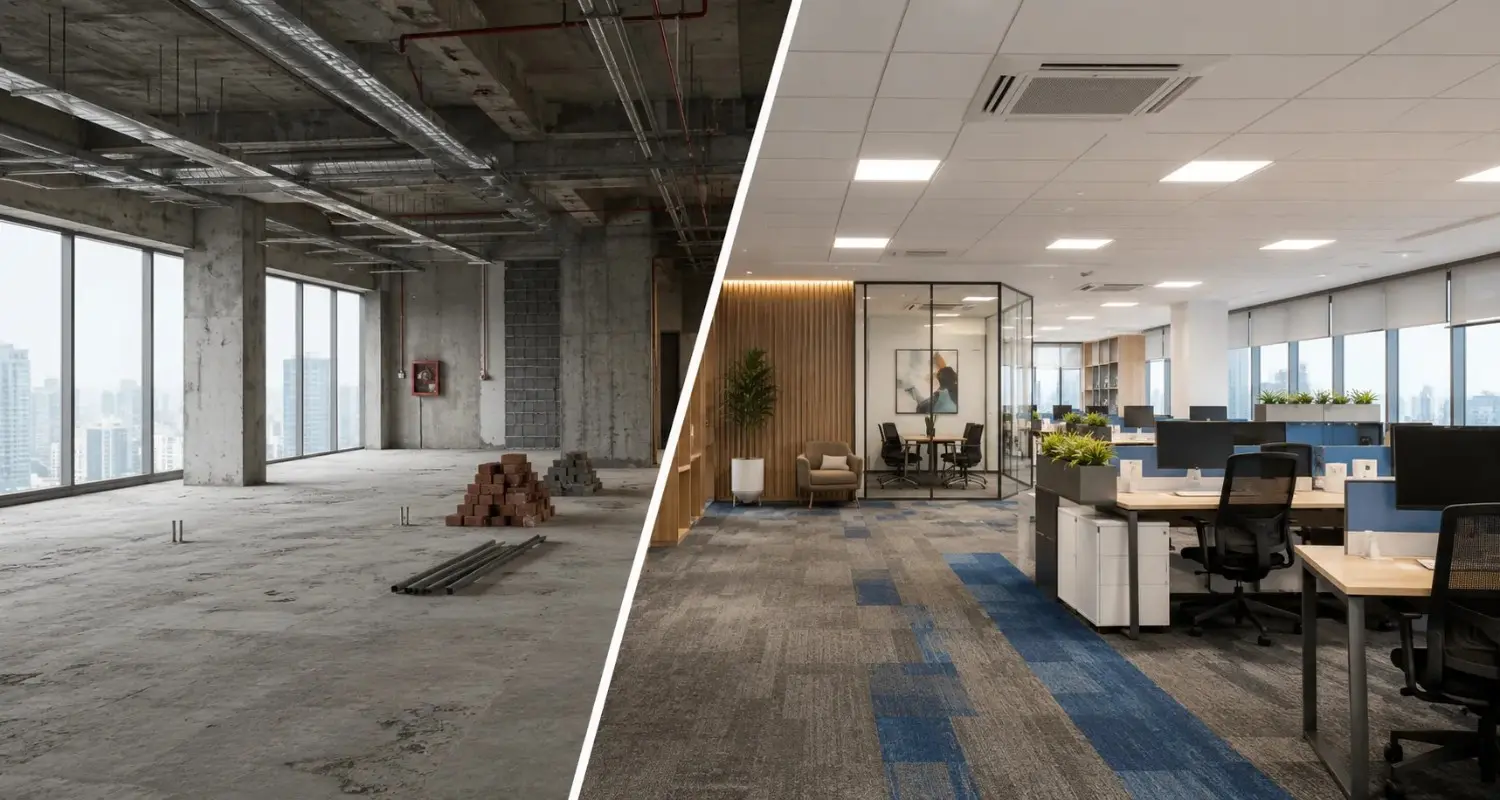
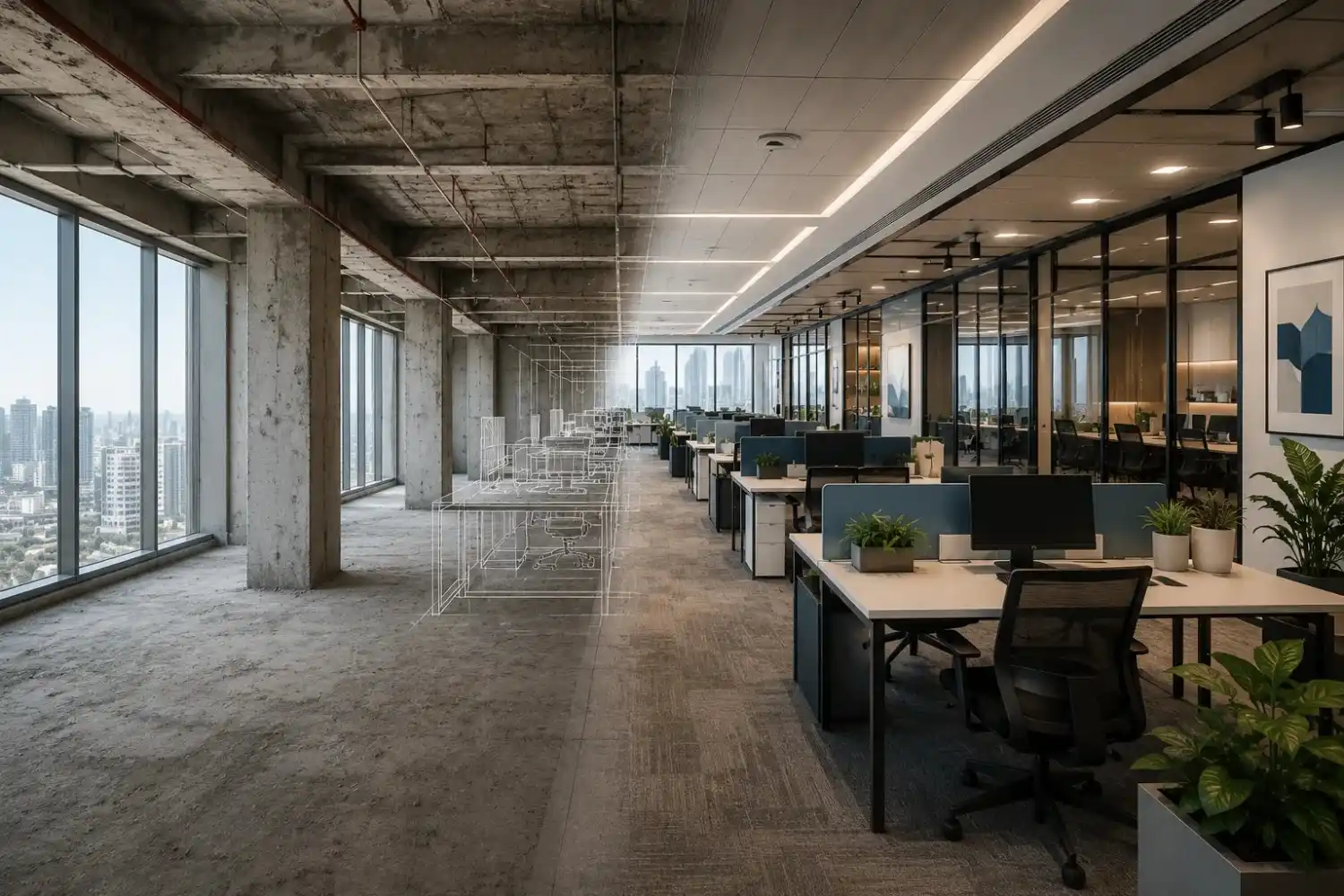
Actually, the two office spaces can have the same rent, the same location, and even the same size. Yet, the complete setup cost can vary by lakhs. Here, the reason mostly comes down to one essential factor: whether the office is a bare shell or a warm shell space. In Delhi NCR, a bare shell office is delivered in an unfinished condition. On the other hand, a warm shell office comes with basic infrastructure such as flooring, lighting, ceiling, along with HVAC systems that are already installed.
So, understanding the difference between a bare shell vs warm shell office is important before you sign a lease. This is because it can directly affect office fit-out cost, move-in timelines, flexibility of customisation, as well as future scalability. In this blog, we’ll compare both office types in detail and help you properly understand which option makes more sense for your business needs.
What is a Bare Shell Office?
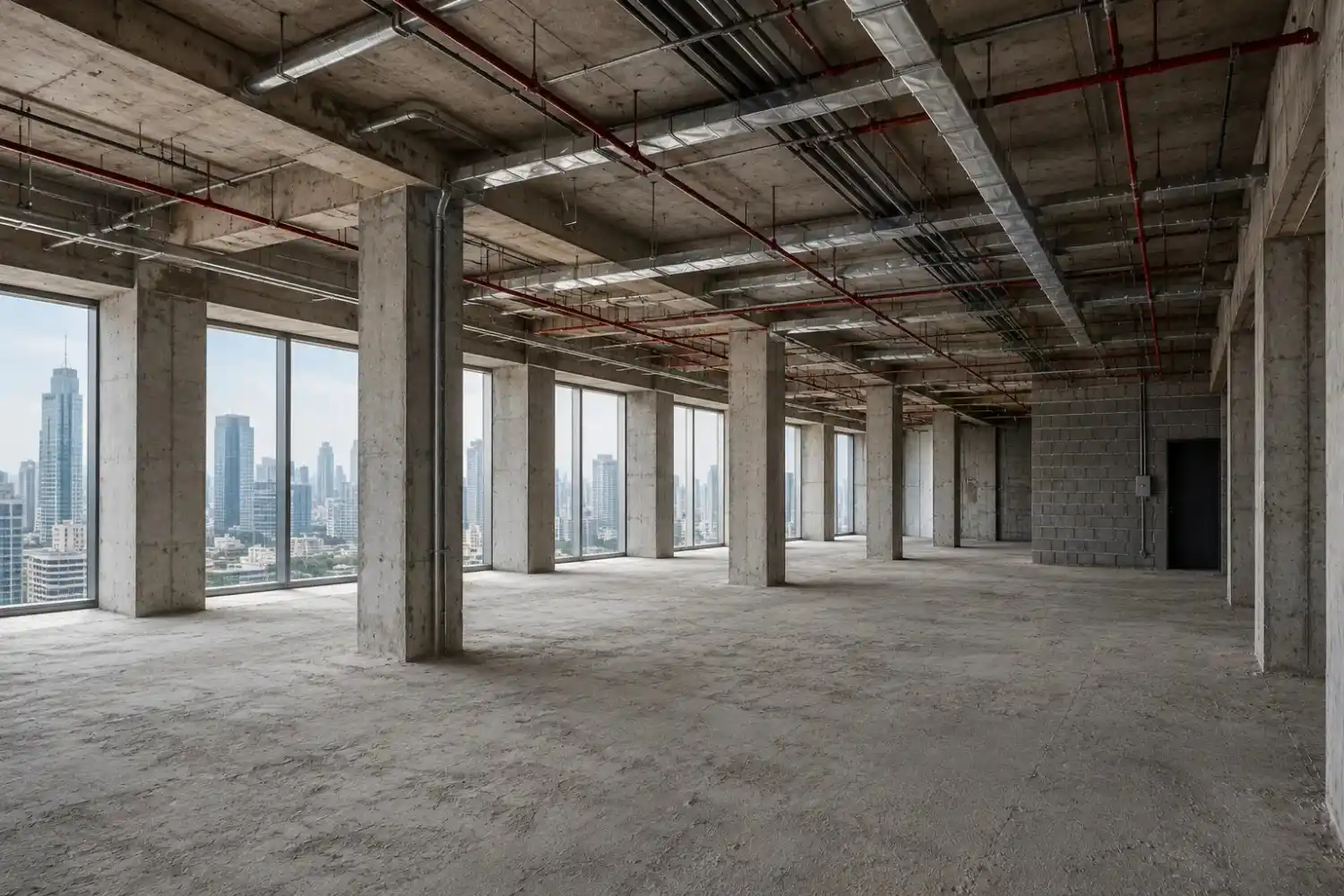
A bare shell office, mostly called a cold shell, is actually a commercial space that’s handed over as a completely raw concrete envelope once core building construction is finished. It works like a blank canvas with zero interior modifications, exposed overhead services, along with unplastered surfaces.
This layout needs a comprehensive turnkey office design and build project, and forces the tenant to manage all interior architecture, spatial partitioning, and core infrastructure development before the workspace can become operational.
Features
-
Flooring: Raw, unfinished concrete slabs, or even rough cement screeds.
-
Walls & Pillars: Bare, unpainted brickwork or sometimes concrete blocks without any plaster or primer.
-
HVAC Infrastructure: Capped duct connection points at the main shafts without distribution internally.
-
Electrical & Plumbing: A lone main distribution board and capped water lines; no wiring or even fixtures.
-
Fire Safety: Basic overhead sprinkler mains that need relocation according to your layout.
Advantages
-
Total Customization: Unhindered freedom to design layouts that can match your precise brand guidelines as well as workflows.
-
No Demolition Costs: You can skip the waste and expense of tearing down some pre-existing walls or even ceilings.
-
Lower Base Rent: Landlords provide discounted rental rates and yield deep operational savings over long-term leases.
Challenges
-
High Initial CAPEX: Your business bears the complete financial burden of installing mechanical, electrical, along with plumbing infrastructure.
-
Protracted Timelines: Ground-up construction extends your setup window, needing months to execute civil work and pass inspections.
-
The "Double Rent" Trap: Extended construction mostly outlasts your rent-free fit-out period, and forces you to pay rent on an unusable site.
Also Read :- Best Office Interior Designers in Gurgaon
Modern Office Cabin Design Ideas for a Premium Corporate Look
What is a Warm Shell Office?
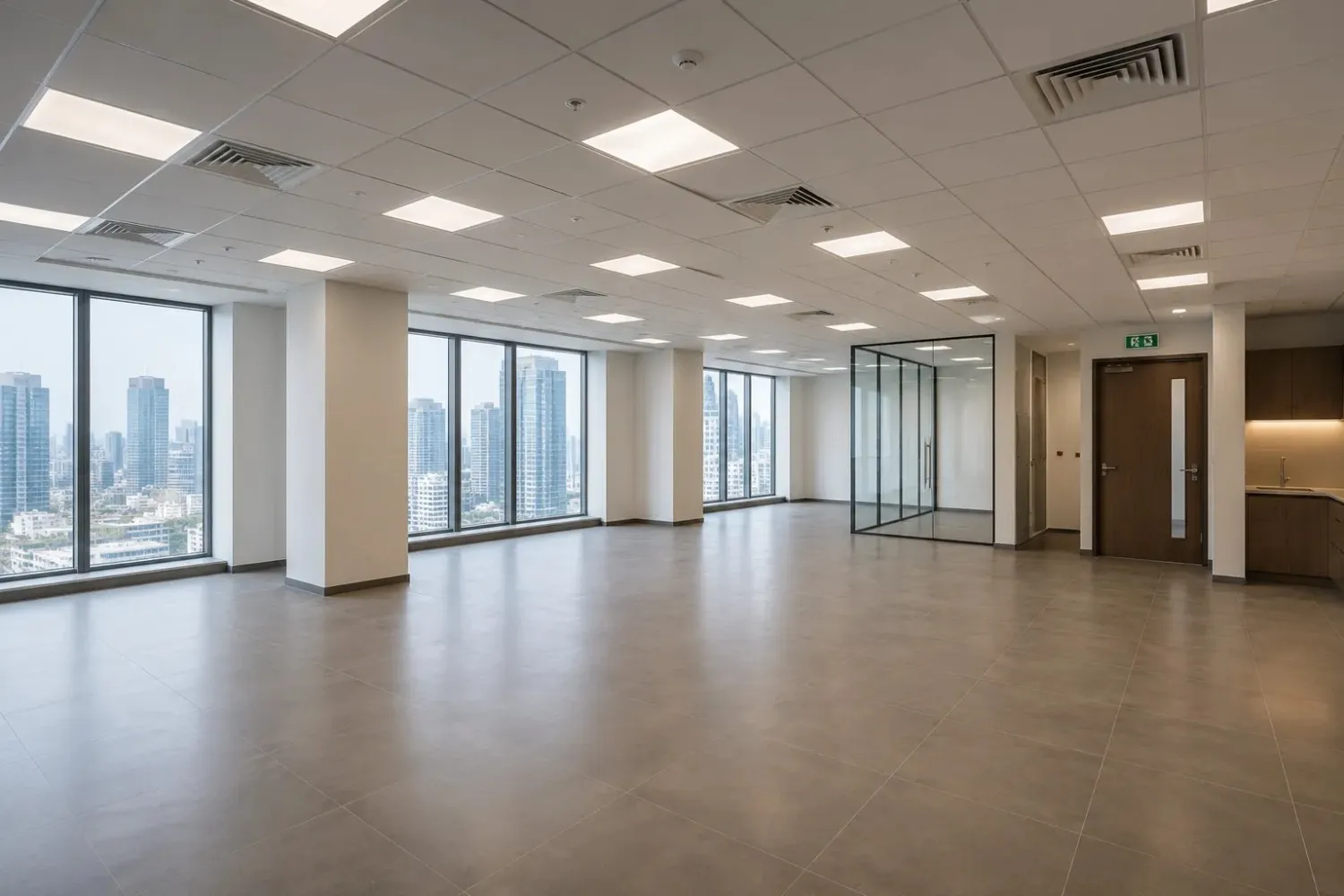
A warm shell office, also known as a vanilla shell, is a commercial space that’s handed over to a tenant with essential interior finishes and primary building services that are already functional. Different from a raw and unfinished layout, a warm shell space is partially completed by the landlord.
It allows your chosen turnkey office interior designers in Delhi to focus strongly on cosmetic personalisation, loose furniture installation, and immediate spatial branding.
Features
When opting for a warm shell unit in premium commercial hubs like Gurgaon or even Noida, the space comes equipped with a solid baseline of infrastructure:
-
Flooring: Finished cement screed, perfectly level and prepared for immediate carpet, vinyl, or even hardwood overlay.
-
Walls: Fully plastered perimeter walls and pillars treated with a clean, primary white primer coat.
-
HVAC Infrastructure: Fully functional heating, ventilation, along with air conditioning setups, complete with pre-routed central ducting and ceiling diffusers.
-
Ceilings & Lighting: Integrated modular grid drop ceilings already fitted with basic commercial LED lighting panels.
-
Plumbing & Utilities: Fully functional core restrooms and a completed wet node connection ready for basic pantry setups.
Advantages
Choosing a warm shell configuration offers distinct operational efficiencies for businesses prioritising speed and financial predictability:
-
Accelerated Occupancy: As heavy mechanical and civil infrastructure is already installed, you completely bypass the foundational construction phases and enable your team to move in quickly.
-
Predictable Capital Expenditures: Your upfront costs remain insulated from the fluctuating market prices of raw materials such as copper wiring, sheet metal ducting, and cement.
-
Streamlined Project Management: Eliminating complex civil engineering tasks significantly reduces the large number of specialised MEP contractors that you need to oversee.
-
Easier Regulatory Compliance: Core building clearance that includes primary fire safety loops and structural load mandates. These are typically secured beforehand by the developer.
Difference Between Bare Shell Office and Warm Shell Office
| Factor | Bare Shell Office | Warm Shell Office |
|---|---|---|
| What You Get | A raw office space with basic structure only. Interiors, flooring, HVAC, lighting, and cabins need to be built from scratch. | A partially ready office with essentials like flooring, ceiling, lighting, and air conditioning already installed. |
| Initial Setup Cost | Higher upfront investment because the entire office setup is done by the tenant. | Lower initial spending since much of the basic infrastructure is already available. |
| Rental Cost | Usually comes with lower monthly rent compared to warm shell spaces. | Rent is generally higher because the landlord has already invested in the interiors. |
| Fit-Out Work Needed | Complete interior execution, including civil work, electricals, HVAC, networking, and workspace planning. | Mostly limited to branding, furniture, partitions, and minor modifications. |
| Move-In Time | Takes longer because the office needs full construction and approvals before operations can begin. | Faster occupancy with reduced execution work and quicker setup. |
| Flexibility | Offers complete freedom to customize the office layout and infrastructure. | Some limitations due to existing ceiling, ducting, and electrical layout. |
| Best Suited For | Large companies, headquarters, IT firms, and businesses planning long-term occupancy. | Startups, SMEs, and businesses looking for quick office setup. |
| Biggest Concern | Higher fit-out cost and longer project timelines. | Existing infrastructure may not always match business requirements. |
| Works Best When | The business wants a fully customized office for long-term growth. | The priority is faster operations with lower setup effort. |
Which Option is Better for Startups?
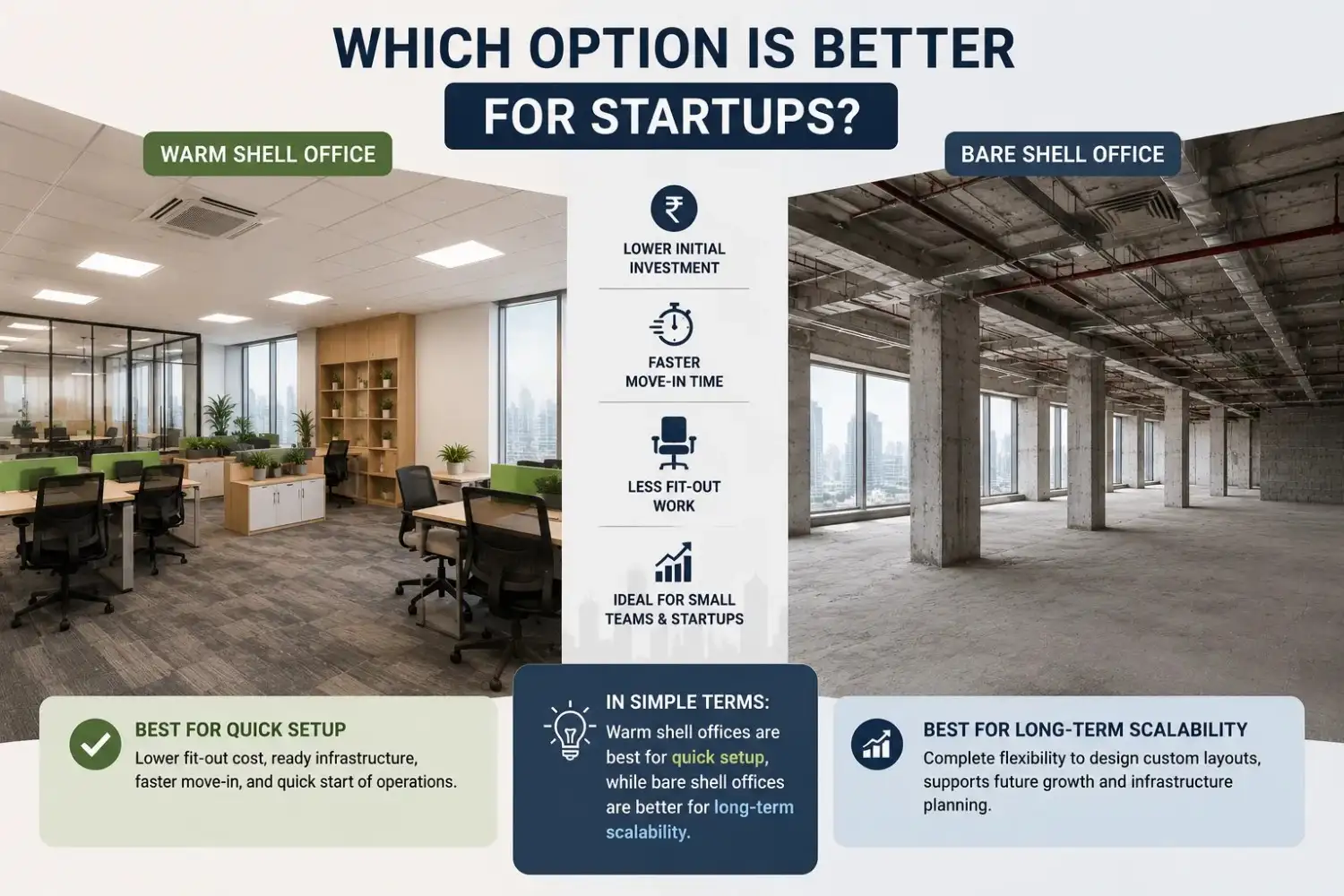
For most startups in Delhi NCR, a warm shell office is often more feasible. Since the space already includes flooring, lighting, ceiling, and HVAC, startups can save on office fit-out costs and start operations quickly with lower investment.
However, startups planning rapid growth or custom office layouts may benefit more from a bare shell office in the long run. Although setup costs are higher, it provides greater flexibility for future expansion and infrastructure planning.
In simple terms:
Warm shell offices are best for quick setup, while bare shell offices are better for long-term scalability.
Which Option is Better for Large Enterprises?
For large enterprises, a bare shell office is usually the better long-term option. Large companies often need customized layouts, conference rooms, advanced technology infrastructure, higher electrical capacity, security systems, and department-wise planning.
Although the initial office fit-out cost is higher, businesses gain better space efficiency, stronger brand identity, and easier scalability in the future.
However, warm shell offices can still work well for regional branches, temporary project offices, or companies needing fast occupancy with minimal setup time.
Common Mistakes Businesses Make During Office Fit-Out
-
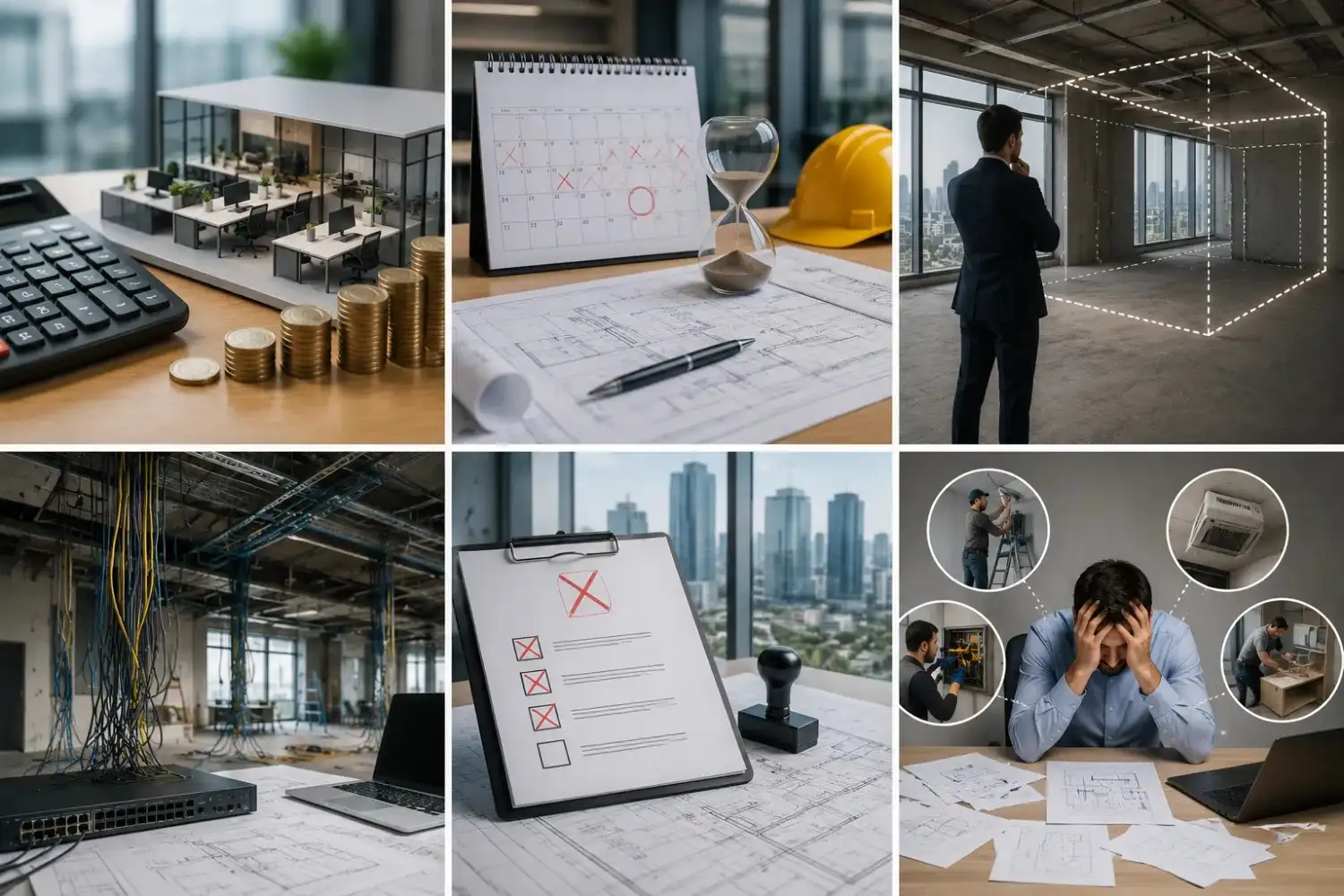
Choosing the office based only on rent
When many businesses compare, they just look at the rental price and don't consider the office fit out cost once they've taken possession, which covers the interior, HVAC, electricals and approvals. -
Underestimating project timelines
Fit-out delays occur when businesses don't factor in approvals, procurement, civil work and coordination amongst multiple vendors. -
Overlooking future expansion plans
If an office is built looking only at the size of the current team, it can be difficult to expand the space and infrastructure to accommodate the growth of the business. -
Failure to plan electrical and technology needs
When the building opens for business, a lack of power capacity, networking setup, and server planning can lead to operational problems. -
Not checking building restrictions early
If building restrictions are not checked early on, the loss could be significant. Fit-out regulations, work hours limitations and approval procedures are some of the requirements that are common in commercial towers in Gurgaon and Noida and can cause delays in the execution process. -
Using multiple uncoordinated vendors
It can result in higher costs and delayed projects if you use different interior, HVAC, electrical and furniture contractors individually.
Conclusion
While the cheapest office space might be the obvious choice, the best fit is the space that can help your business thrive, expand and be as efficient as possible in the long run.
Knowing the difference between a bare shell vs warm shell office can help businesses make better leasing decisions, manage the cost of office fit out, and prevent any unnecessary delays in execution or redesign costs in the future.
From conceptualisation to implementation, Serein Spaces offers you end-to-end turnkey office design and build solutions in Delhi NCR, providing you with a seamless experience that positions you for a future-ready and scalable workspace environment.

