
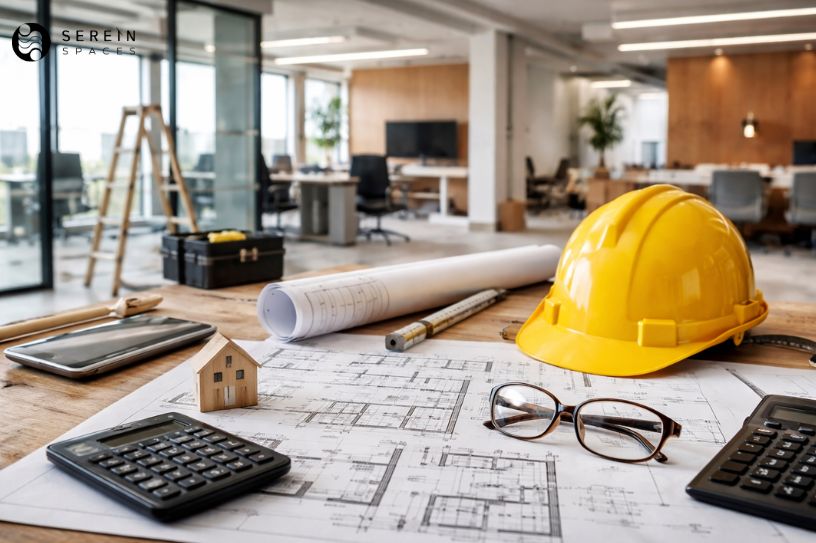
At first glance, an office interior project feels simple. The layout is finalized, the budget is set, along with the schedule is in place. However, as work progresses, unexpected expenses mostly energy, some from avoided details, while others from underestimated requirements.
These hidden costs in office interior design can later quietly inflate your budget, extend timelines, and complicate execution. From site-related challenges and material upgrades to electrical adjustments and last-minute design changes, numerous factors contribute to the final office interior cost breakdown.
In this blog, we’ll break down the most common hidden cost areas, explain why they actually occur, and share some practical strategies in order to keep your project on budget and running smoothly through careful office interior project planning.
Why Hidden Costs Occur in Office Interior Projects?
Hidden costs in office interior design mostly arise because initial budgets rarely capture every execution in detail. While plans include furniture, finishes, along with layouts, several office interior cost factors only become apparent during the build phase, and leads to unexpected expense and higher office interior execution cost. Here are four common reasons:
-
Incomplete Site Assessment: Hidden issues such as uneven floors, old wiring, or sometimes structural limitations can surface during execution and need costly fixes.
-
Frequent Design Revisions: Modifications in layouts, finishes, or even furniture after work starts create extra labor, materials, and updated drawings.
-
Underestimated Technical Needs: Sometimes we overlook electrical, IT, and HVAC requirements, and later want to upgrade, but it increases workplace design cost and timelines.
-
Regulatory Oversights: Avoiding building codes, fire safety, or local approvals can lead to penalties or some expensive modifications.
Common Hidden Costs in Office Interior Design
When planning an office interior, the budget mostly accounts for obvious items such as furniture, paints, or sometimes partitions. But the real cost tends to hide in areas that only surface during execution. So, understanding these common hidden costs in office interior projects can help you plan and avoid surprises:
1. Design & Consultation Revisions
Even the most well-thought-out design can change once the space starts taking shape. Customers primarily adjust designs, color schemes, or even the arrangement of furniture once they have a glimpse of the office. In this case, every update requires designers and consultants to spend more time, and costs more in terms of the interior of the office. Even frequent changes are not only more costly but also may slow down the timelines in case they are not efficiently managed. In many cases, businesses aiming for a well-designed corporate office often request multiple revisions to match their brand vision, which can gradually increase design costs and timelines.
2. Site Preparation Costs
A seamless implementation starts with a prepared site, yet most enterprises do not plan on how many costs to incur on site preparation. Problems with flooring, old wiring, or even structural repairs that can occur unexpectedly are commonly noticed after work begins. The failure to take these early can result in haste fixes and increased costs in the office construction cost factors.
3. Material Upgrades
Material decisions can significantly impact the overall budget. The use of high-end laminates, hardwood, or quality partitions can increase expenses, while the time required to source upgraded materials may also extend project timelines and labor costs. Businesses opting for premium office interior design often prefer superior materials and finishes, which can further raise both material and execution costs if not planned properly in advance.
4. Furniture & Customization Costs
Custom furniture and modular setups are appealing, especially when exploring modern office table designs. But they come with hidden expenses. Several factors like specialized hardware, installation adjustments, or unique dimensions, sometimes push the cost estimation higher than expected. Without proper upfront planning, these customizations can add up quickly.
5. HVAC & Ventilation Adjustments
Ventilation and air conditioning are essential to the comfort of employees, yet are often ignored when setting up a budget in the first place. There are also factors of hidden office interior design costs such as rerouting ducts, adding more cooling zones, or updating systems to be more energy efficient.
6. Technology & IT Infrastructure
When it comes to a modern workspace, IT needs IT setups. Added expense comes out of unexpected cabling, server room, or expansion of the network or audiovisual system. Failure to do so at an early stage may cause a huge rise in the cost of the workspace design.
7. Electrical & Lighting Changes
Electrical layouts are not taken seriously during the initial stage of planning of office interior design by the majority of us. And, with the extra power points, re-designing the lighting, or even just moving switches after they are installed, adds extra labor and materials costs. In fact, IT infrastructure and integration of HVAC may also be impacted by poor electrical work and cause additional costs. Additionally, late decisions related to color for office interiors and lighting combinations can further increase rework and overall expenses.
8. Compliance & Approval Costs
One of the pitfalls is not paying attention to regulatory requirements in the process of planning. Unexpected costs can be occasioned by local building codes, fire safety standards and municipal approvals. It is also important to account for these upfront to prevent penalties or last minute change.
9. Project Delays
Delays are not merely about misplaced time. In addition to that, they directly affect cost. Long working hours, late rentals, and delayed operations can easily add to your office interior implementation budget. These reasons are late material deliveries, design alterations or in some cases contractor management.
10. Post-Completion Fixes
Even after handover, minor adjustments are mostly required. Loose fixtures, paint-ups, or alignment fixings may not appear to be much on their own but when combined with your budget. A post-completion buffer helps you avoid being caught by these office renovation cost surprises so that it does not hurt your budget.
How to Avoid Hidden Costs in Office Interior Design?
When it comes to avoiding hidden costs in office interior design, it’s not all about cutting corners. It’s actually about making decisions smartly at the right stage. Most of the cost overruns take place due to gaps in planning, unclear scope, or sometimes delayed decisions. When you approach the project with clarity and structure, you get better control over your office interior cost estimation and reduce unnecessary expenses. This is where a smart office design approach helps in planning efficiently and minimizing unexpected costs.
Here’s how you can do it effectively:
1. Choose Detailed Planning from Day One
A well-defined plan can be your strongest defense against unexpected costs. It includes finalized layouts, material specifications, electrical plans, as well as timelines.
2. Opt for Turnkey Office Design and Build
Collaborating with a single team for both design and execution simplifies the complete process. And, a turnkey approach reduces miscommunication, aligns budgeting with execution, and ensures better control over the office interior execution cost. It also removes the risk of gaps between numerous vendors.
3. Set a Realistic Budget with Buffer
Numerous projects run into trouble as the budget is too high. So, always include a contingency buffer of around 10-15% in order to manage several unexpected expenses. And, this simple step can protect your overall project from unexpected disruptions.
4. Conduct Proper Site Inspection
Never be dependent solely on assumptions or old layouts. A thorough site inspection helps identify structural issues, electrical limitations, and space constraints early on. So, addressing these before even execution prevents costly corrections later in the office renovation cost breakdown.
5. Finalize Design Before Execution
One of the biggest mistakes is making changes after work has actually started. Late design revisions make a negative impact on material, labor, and timelines. So, locking your design earlier ensures smooth execution and keeps your office interior design cost under control.
6. Work with Experienced Office Interior Designers
Experienced professionals better understand how to balance design, functionality, and cost. They can guide you on material selection, technical planning, and vendor coordination, and help you avoid common office cost surprises that lead to overruns.
7. Use Transparent Cost Breakdown
Always ask for a detailed and itemized cost structure. This is because office interior cost breakdown should include materials, timelines, labor, and contingencies. Most importantly, transparency always helps you check spending and prevent hidden charges from appearing later.
8. Prioritize Function Over Aesthetics Initially
No matter if aesthetics are important, functionality still should come first. So, just keep your focus on layout efficiency, workflow, and usability before even investing in premium finishes. This approach keeps your workspace design cost practical and allows flexibility for upgrades later.
Why Turnkey Solutions Help Control Costs
Turnkey solutions smartly bring structure and clarity to the project, and make cost control far more manageable. With just one team handling everything, the chances of unexpected expenses reduce significantly. Here’s more why:
-
Single Point of Responsibility
One team manages design and execution, which avoids confusion, delays, along with extra costs caused by misconceptions between multiple vendors.
-
More Realistic Budgeting
The costs are designed to be executed, hence budgets are prepared with materials, labor, and site challenges in consideration.
-
Reduced Midway changes that are expensive
The designs are accurately made keeping in mind practical execution, and the designs make less areas which tends to reduce expenses in the future.
-
Improved Cost Monitoring in the implementation
A lean process will give you a clear picture of spending and will enable you to be in control and prevent unnecessary overruns.
Choosing experienced turnkey office interior designers in Delhi can further help ensure better cost control, efficient execution, and a hassle-free project experience.
Conclusion
So, big mistakes do not usually cause hidden costs. They are the result of a few minor planning and implementation loopholes that compound with time. These surprises are easier to deal with when you walk into your office interior with a clear vision, proper planning, and the right people.
It is simple to stay within budget; however, to create a space that functions without constant repairs. To make the project run smoothly and be well-managed, get in touch with Serein Spaces, a trusted commercial interior designer.


