Every outstanding team genuinely needs a workspace that matches their level of effort. Do you know? The layout of an office can either make work seem effortless or make each day difficult. But a well-thought-out office layout actually affects how people move around, interact, and think, resulting in a setting that truly fosters concentration and teamwork.
The right design can even boost morale and productivity. It doesn't matter if the layouts promote teamwork, offer quiet areas for concentration, or are adaptable enough to meet demanding requirements.
In this guide, we’ll explore different office layout designs, weigh their advantages and challenges, and look at modern office layout trends that truly inspire efficiency, creativity, along with engagement in today’s workspace.
Understanding Office Layouts
An office layout is actually the blueprint of how exactly work flows within a company. It develops interactions, productivity zones, and sets the tone for employee experience. A well-planned office layout design goes really beyond aesthetics.
Over and above that, it aligns space with business objectives, team dynamics, along with the types of work being done. Moreover, modern offices are shifting away from rigid setups, focusing instead on flexibility, efficiency, and well-being.
So, understanding the core principles of office layout organization makes strategic decisions that truly improve collaboration, minimize distractions, and ultimately optimize space usage.
When evaluating an office layout, consider these key elements:
-
Workflow optimization: It ensures employees can move and collaborate without even friction.
-
Collaboration zones: Here, spaces are designed for brainstorming and team interactions.
-
Quiet and focus areas: There are dedicated zones for deep, uninterrupted work.
-
Adaptability: You get layouts that can evolve with changing team sizes and work styles.
When businesses understand these fundamentals, they can create such an environment that is not only functional but also engaging, productive, and aligned with the needs of the modern workspace.
Types of Office Layouts in Modern Design
The 3 main types of office layouts are open, closed, and hybrid, and each serves different work needs. Here are 3 main types:
Open Office Layout
An open office layout perfectly removes physical barriers, encouraging teamwork and communication. Actually, it promotes collaboration, transparency, along with flexibility, and this makes it perfect for startups, creative teams, and environments exactly where interaction and idea-sharing are really key to productivity.
Closed Office Layout
A closed office layout offers private rooms or cabins, promoting focus and minimal distractions. Ultimately, it suits tasks needing confidentiality, concentration, or even executive-level work, and provides employees privacy along with a quiet workspace.
Hybrid Office Layout
On the other hand, a hybrid office layout combines open and closed spaces that precisely balance collaboration with privacy. Furthermore, it adapts to various work styles, supports flexible schedules, while creating a productive, engaging, and versatile modern workspace.
Read More : Modern Office Cabin Design Ideas
Why Office Layout Matters in Modern Workspaces
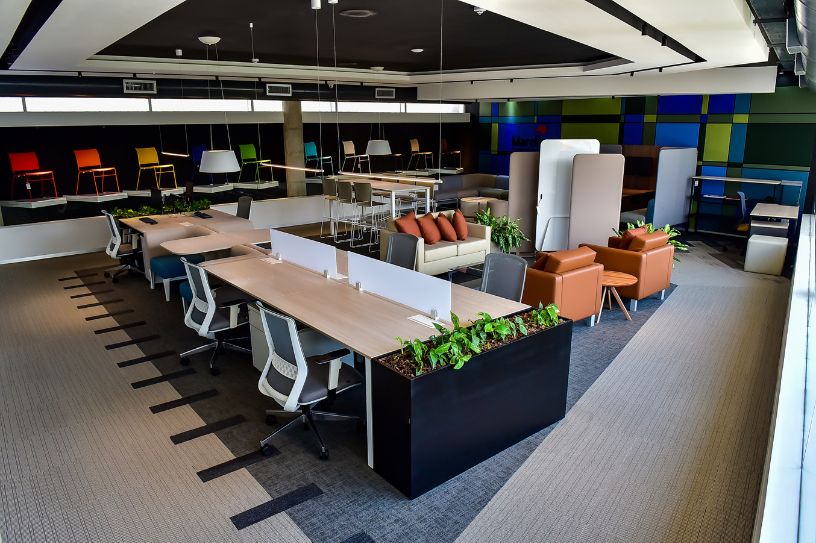
The design of an office plays a crucial role in how exactly a team works every day. It truly brings structure to how people move, interact, and complete tasks, making it an essential element of modern workspace planning.
Here’s why choosing the right layout is so important:
-
Improves productivity
A strategic office layout design eliminates unnecessary movement and distractions, and helps employees focus better and complete tasks even more efficiently.
-
Enhances collaboration
Well-designed open office layouts or even shared zones allow teams to connect easily, share their ideas, and solve issues faster.
-
Supports focused work
Including private or sometimes enclosed areas within a closed office layout truly helps employees handle sensitive tasks, deep work, or meetings without even any interruptions.
-
Boosts employee comfort and well-being
A thoughtful modern office layout considers lighting, spacing, noise control, along with ergonomics, and creates a healthier and more comfortable environment.
-
Adapts to changing work styles
When companies have a flexible hybrid office layout, it allows accommodation for remote work, shifting team sizes, as well as multifunctional spaces without even major renovations.
What is an Open Office Layout?
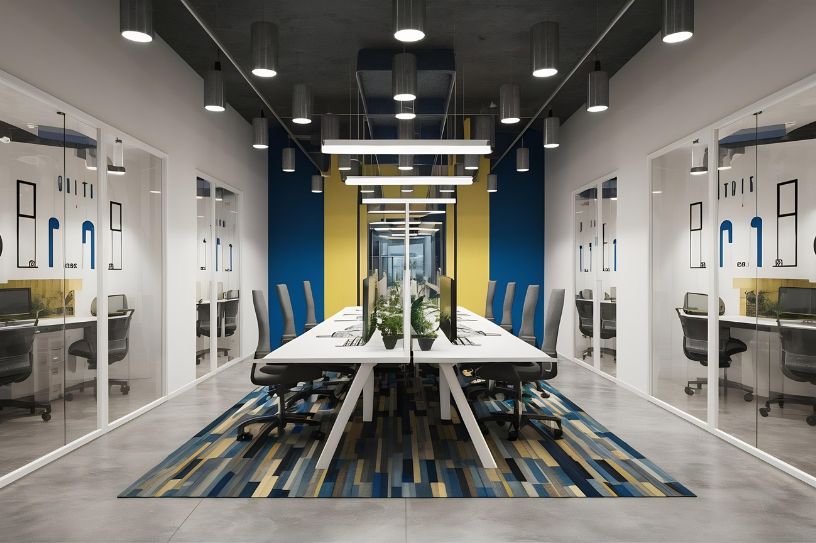
An Open Office layout is a spacious, barrier-free design in which employees work within a shared environment. And, this type of office layout is being used to encourage communication, transparency, and easy teamwork. This type of layout can be seen commonly in creative agencies, tech, startups, as well as companies that depend on fast collaboration.
Advantages of Open Office Layouts
- Encourages quick communication and reduces delays between teams.
- Helps build a collaborative culture through shared spaces.
- Cost-effective because it uses space efficiently.
- Supports modern workspace design and flexible seating arrangements.
Disadvantages of Open Office Layouts
- Noise levels can rise and affect focus.
- Limited privacy for tasks that require concentration or confidentiality.
- Higher chances of disruptions in busy departments.
- Not suitable for roles that require long hours of quiet work.
Ideal Use Cases for Open Office Layouts
Open layouts fit well for brainstorming teams, marketing agencies, design studios, customer support units, along with startups that are fast-growing. These layouts are effective when the priority is teamwork, idea flow, along with a lively modern office layout.
What is a Closed Office Layout?
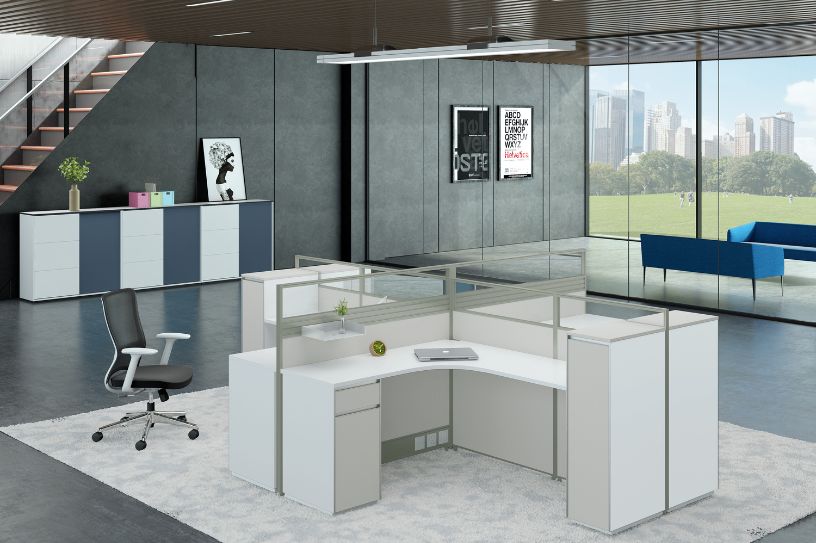
It is a layout that has separate rooms, cabins, or sometimes partitions that give individuals or small teams their own delicate workspace. This design supports privacy, focus, and structured workflows, and this makes it a strong alternative for roles that need confidentiality or uninterrupted work.
Advantages of Closed Office Layouts
- Provides quiet spaces ideal for deep focus and private discussions.
- Helps maintain confidentiality in finance, HR, legal, and executive roles.
- Reduces distractions, improving accuracy and detailed work.
- Supports a more formal corporate office layout planning approach.
Disadvantages of Closed Office Layouts
- Can limit collaboration if teams are physically isolated.
- Takes up more space compared to open layouts.
- May feel less dynamic or less social for certain teams.
- Higher setup and maintenance costs.
Ideal Use Cases for Closed Office Layouts
Closed layouts are perfect for law firms, financial institutions, research departments, senior management teams, and organizations that handle sensitive data. Moreover, they work well when focus, privacy, and structured communication are truly important.
Read More : Best False Ceiling Design for Office InteriorsOpen vs. Closed Office Layout: A Detailed Comparison
| Factor | Open Office Layout | Closed Office Layout |
|---|---|---|
| Work Style | Encourages teamwork and fast communication in a shared space. | Supports privacy and focused, individual work. |
| Noise Levels | Higher noise and frequent distractions. | Quieter environment with minimal interruptions. |
| Collaboration | Easy interaction, ideal for creative or dynamic teams. | Limited spontaneous collaboration. |
| Productivity | Great for tasks needing constant communication. | Best for detailed, confidential, or deep-focus work. |
| Space & Cost | Space-efficient and budget-friendly. | Requires more space and higher setup costs. |
Hybrid Office Layout: The Best of Both Worlds
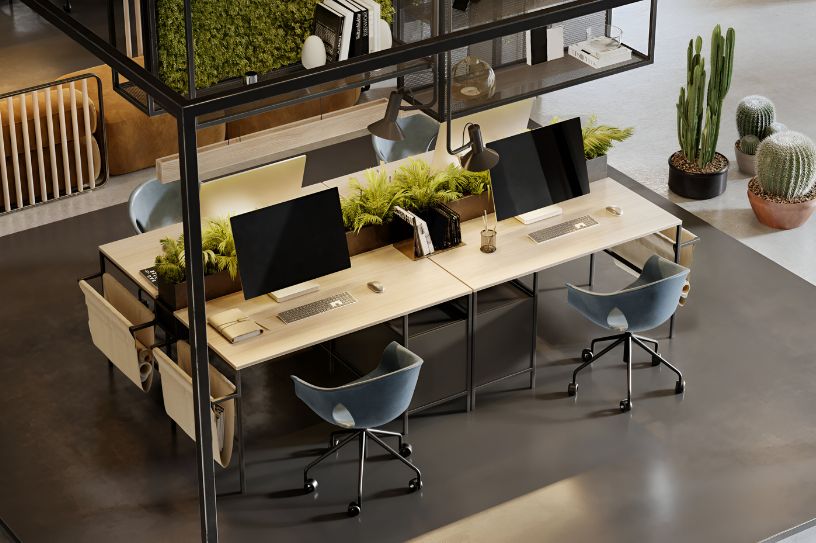
A hybrid office layout has the openness of shared spaces along with a privacy of enclosed areas. Furthermore, it supports various different work styles and offers flexibility, and this makes it one of the most preferred choices in modern office layout design.
What is a Hybrid Office Layout?
A hybrid office layout blends open seating zones with private rooms or sometimes quiet areas. Moreover, it allows employees to choose where exactly they work on the task, offering freedom, comfort, and perfectly balanced opportunity.
Features of Hybrid Workspaces
-
Flexible zones: Mix of open desks, collaboration corners, and private cabins.
-
Task-based design: Spaces created for brainstorming, focus work, and meetings.
-
Adaptive seating: Hot desks, shared areas, and designated quiet zones.
-
Tech-ready rooms: Video conferencing, shared screens, and digital tools.
Benefits of a Hybrid Approach
- Supports teamwork without sacrificing privacy.
- Enhances productivity by giving employees control over their workspace.
- Ideal for companies with remote or rotating teams.
- Improves space utilization and reduces unnecessary office clutter.
Factors to Consider When Choosing an Office Layout
Choosing the right office layout depends on how your team functions and what your workspace can realistically support. Thoughtful planning is essential, which is why many businesses work with commercial interior designers in Noida to get layouts that balance comfort and productivity:
1. Nature of workWhile roles requiring focus benefit from quieter, enclosed spaces, collaborative teams require open or hybrid spaces.
2. Size and composition of the teamExpanding teams require adaptable layouts that don't require constant redesign.
3. Spending limit and available spaceWhile larger spaces can include cabins, meeting rooms, and break areas, smaller offices typically favor open seating.
4. Workflow requirements and technologyThe design should facilitate strong connectivity throughout the workspace, easy access to power, and seamless mobility.
5. Employee well-beingEveryday performance is greatly impacted by ergonomic furniture, proper ventilation, and good lighting.
Role of Interior Design in Workspace Planning
- Enhances mobility, communication, and general productivity in the workplace by assisting in coordinating office interior design with daily workflows.
- improves well-being with ergonomic selections, intelligent lighting, and a contemporary office design that promotes comfort all day.
- enhances brand identity by incorporating corporate culture-reflective hues, materials, and finishes into commercial office design.
- increases productivity through the use of strategic office space planning that minimizes clutter and provides easy access to key areas.
- maximizes the impact of office layout design by developing adaptable spaces that suit various roles, such as small office layout design solutions or collaboration zones.
- ensures long-term flexibility by carefully planning office space to accommodate team expansion, future growth, or a change to a hybrid office layout.
Modern Trends in Office Layout Design
- Activity-based work zones
- Flexible seating plans
- Nature-inspired biophilic elements
- Technology-integrated smart workspaces
- Acoustic-focused design for quiet areas
- Collaboration pods and huddle spaces
- Minimalist furniture with multifunctional use
- Wellness-centered breakout corners
- Hybrid-friendly layout planning
- Sustainable materials and eco-conscious design
Conclusion
The design of your office perfectly sets the tone for how exactly work gets done every day. A thoughtfully planned office layout boosts collaboration, focus, and overall employee satisfaction.
For all the businesses that are aiming to create functional, inspiring, and future-ready spaces, Serein Spaces, turnkey office interior designers in Delhi, blends expertise and innovation in order to deliver layouts that enhance productivity, support diverse work styles, and reflect the company's culture effectively.